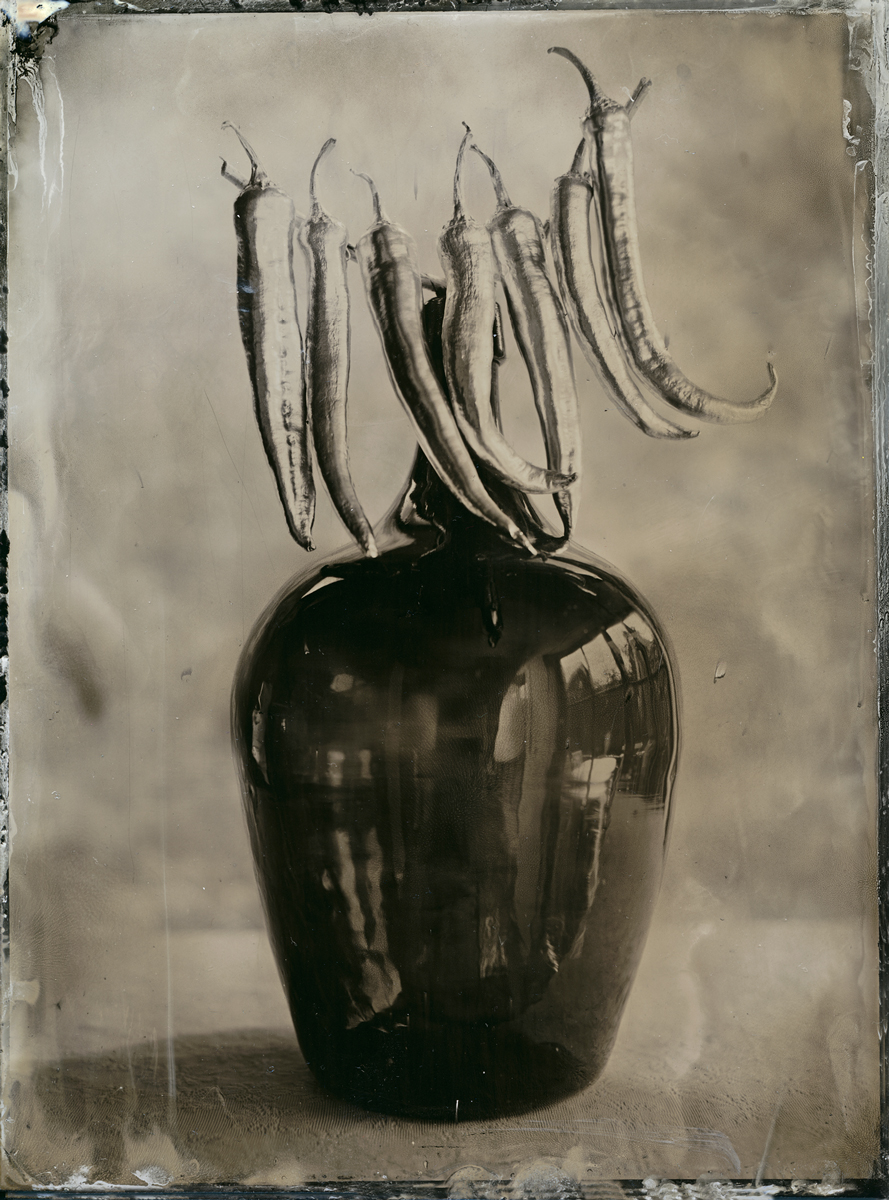
Wet-plate collodion photography
The wet-plate collodion process emerged in the early 1850s. Gustave Le Gray described the use of collodion in photography as early as 1850; Frederick Scott Archer published a fully worked-out practical process in 1851. This opened up new possibilities for producing finely detailed photographs on glass.
Its adoption was driven by both technical and economic factors. Compared with the daguerreotype, it offered lower production costs and shorter exposure times. It also combined fine detail with the ability to make numerous paper prints from a glass negative. Whereas a daguerreotype produced a single image on a silver-plated surface, a photograph could now be reproduced and distributed more easily. As a result, the collodion process largely displaced the daguerreotype over the following decades.
As early as 1852, Frederick Scott Archer highlighted the connection between practical handling and the appearance of the images:
“In conclusion, I do not hesitate to say, that no one with ordinary care and forethought in procuring good chemicals, and strict attention to cleanliness in the different stages of the process, will fail to meet with success: and if after a little practice a fixed method in the arrangement of the various accessories required can be attended to,—keeping, in fact, everything in good order,—the whole process will be found a source of much pleasure. In the practice of no other process at present known, can such good results be obtained, with so little labour and cost.”