A rare Tessar 1:2.7 16.5 cm
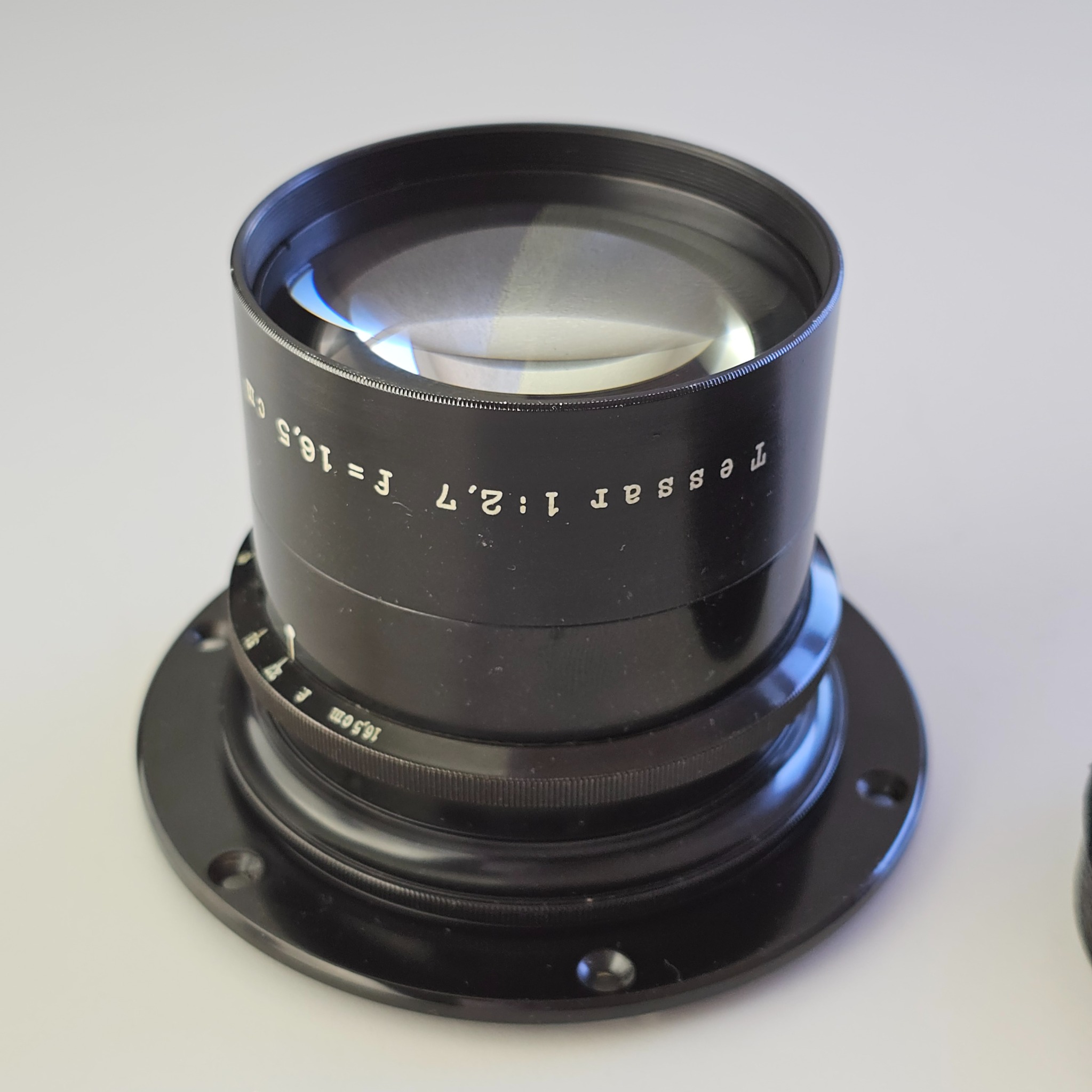
Yesterday, a Carl Zeiss Jena Tessar 1:2.7 – 16.5 cm arrived.
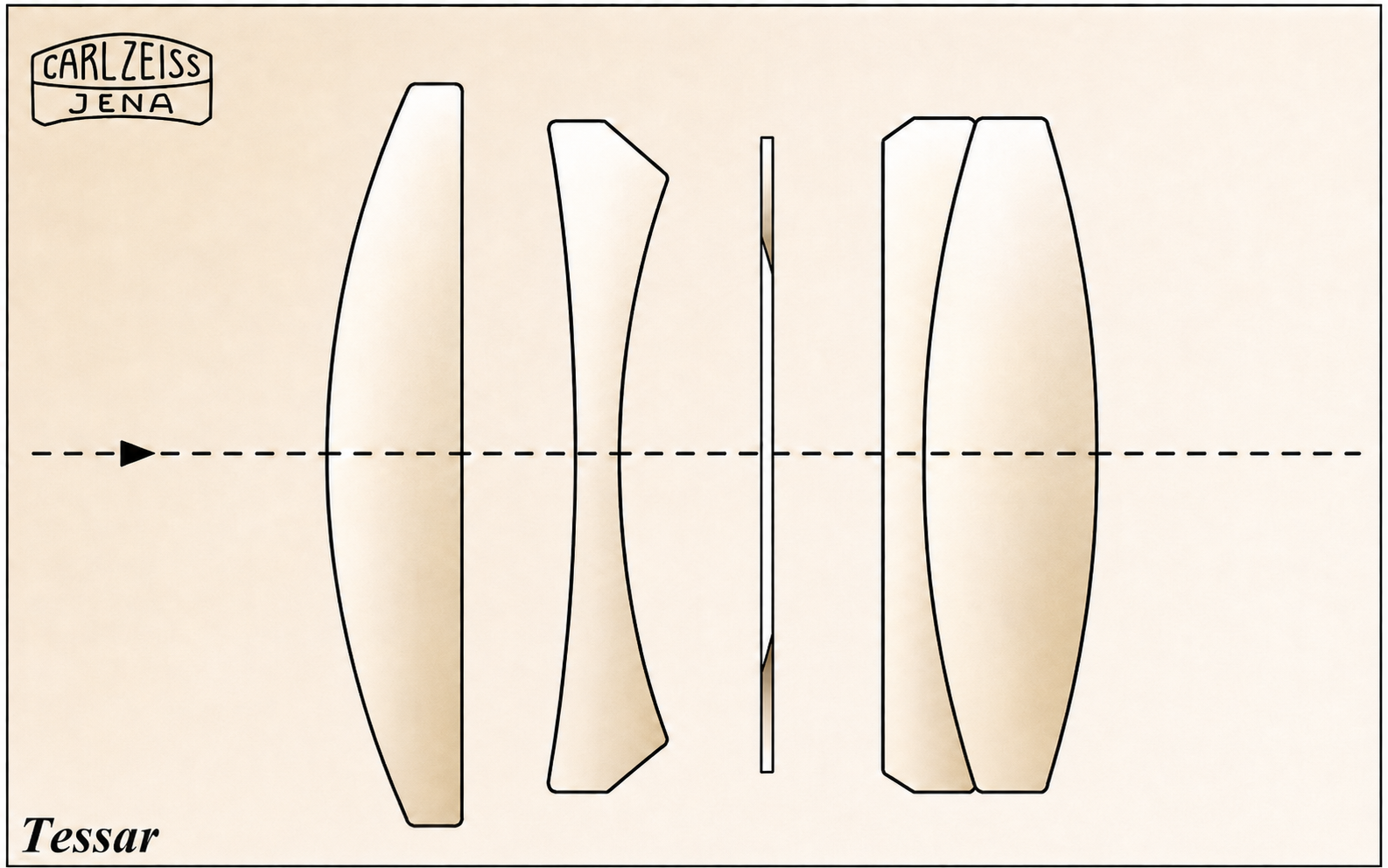
The name Tessar comes from the Greek word for “four” and refers to its construction with four lens elements: two separate elements at the front and a cemented doublet at the rear. A Tessar in itself is not a rare lens, as Tessars were manufactured in very large numbers over many decades.
The particularly fast 1:2.7 version occupies a special position within the Tessar family and was exceptionally fast for a large-format lens of its time. The optical design of this fast Tessar version was completed in 1924. From 1925, the lens was manufactured primarily for plate single-lens reflex cameras in the 9 × 12 cm format. A few years later, it was followed by the Biotessar 1:2.8/16.5 cm. Despite its name, the Biotessar is not a true Tessar in optical terms, as it has more than four elements and is based on a different design.
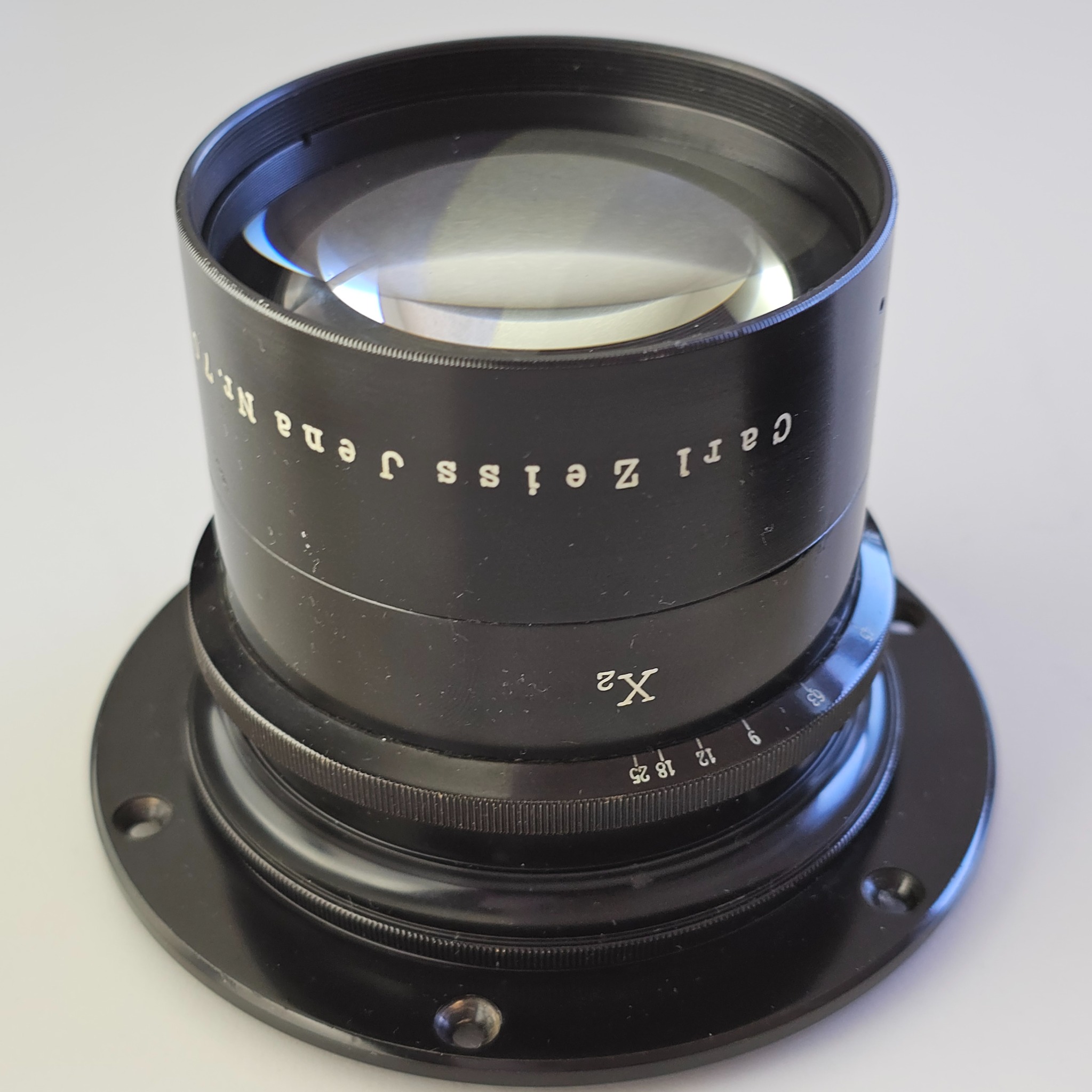
My example bears the serial number 706243 and can be dated approximately to 1926/27 on that basis. It is therefore around 100 years old today.
The mount is unusual too. The lens has no built-in focusing helicoid of the kind found on the usual examples of this Tessar, which are now frequently seen in listings on eBay, for example. Instead, it sits in a comparatively simple barrel with a flange. This plain version in particular seems to be considerably rarer; so far, I have not been able to find another Tessar 1:2.7/16.5 cm in exactly this mount.
The middle barrel and the flange are made of solid brass. The front mount containing the two air-spaced elements and the rear mount containing the cemented doublet, on the other hand, are made of aluminium. I have never encountered this combination of materials in a historical lens before. With its flange, it weighs around 840 grams.
Its condition is particularly pleasing. After careful cleaning, the glass is clear and free of haze; I cannot see any scratches. There are, however, a few small air bubbles in the glass. The widespread myth that such bubbles indicate particularly high glass quality is not correct in that form. They were not a sign of quality, but were tolerated in small numbers.
I have not taken any photographs with it yet. On 4 × 5 inches, it could be particularly suitable for portraits with a shallow depth of field. Until now, my fastest lens for daguerreotype portraits was the Mamiya Sekor Z 110 mm 1:2.8 on the Mamiya RZ67. That, however, is a medium-format lens with a correspondingly smaller image circle covering the 6 × 7 cm format. At almost the same maximum aperture, the Tessar has a much larger image circle and can therefore be used on 4 × 5 inches for daguerreotypes, ambrotypes and other historical processes.
On the whole, I am very pleased with the purchase and curious to see the image character this almost 100-year-old Tessar will produce, particularly wide open.
A few more interesting facts:
The Tessar even shaped the historic Carl Zeiss company emblem: the outer contours of the logo represent a stylised version of the cemented rear lens pair of the Tessar. The emblem was designed in 1902, registered as a trademark in 1904 and used on almost all Carl Zeiss instruments and printed materials from 1906 onwards. In Jena, this logo shape remained in use until German reunification. Even in today’s blue ZEISS logo, which has been used in this form since 1997, the lens curve derived from the Tessar’s rear group is still recognisable in the lower contour. The fact that Zeiss chose the rear group of the Tessar for its company emblem shows the special significance of this design. ZEISS itself describes the Tessar as the most famous and most copied camera lens of all time.
Zeiss and Schott, a manufacturer of specialised optical glass, worked very closely together in Jena. In 1884, Otto Schott, together with Ernst Abbe and Carl Zeiss, founded the Glastechnisches Laboratorium Schott & Genossen, which developed new types of optical glass for Zeiss. It is therefore very likely that Schott glass was used in this Tessar, although this cannot be established for every individual lens element without the original production records.