A Leather Cap for the Carl Zeiss Jena Tessar 25 cm f/3.5
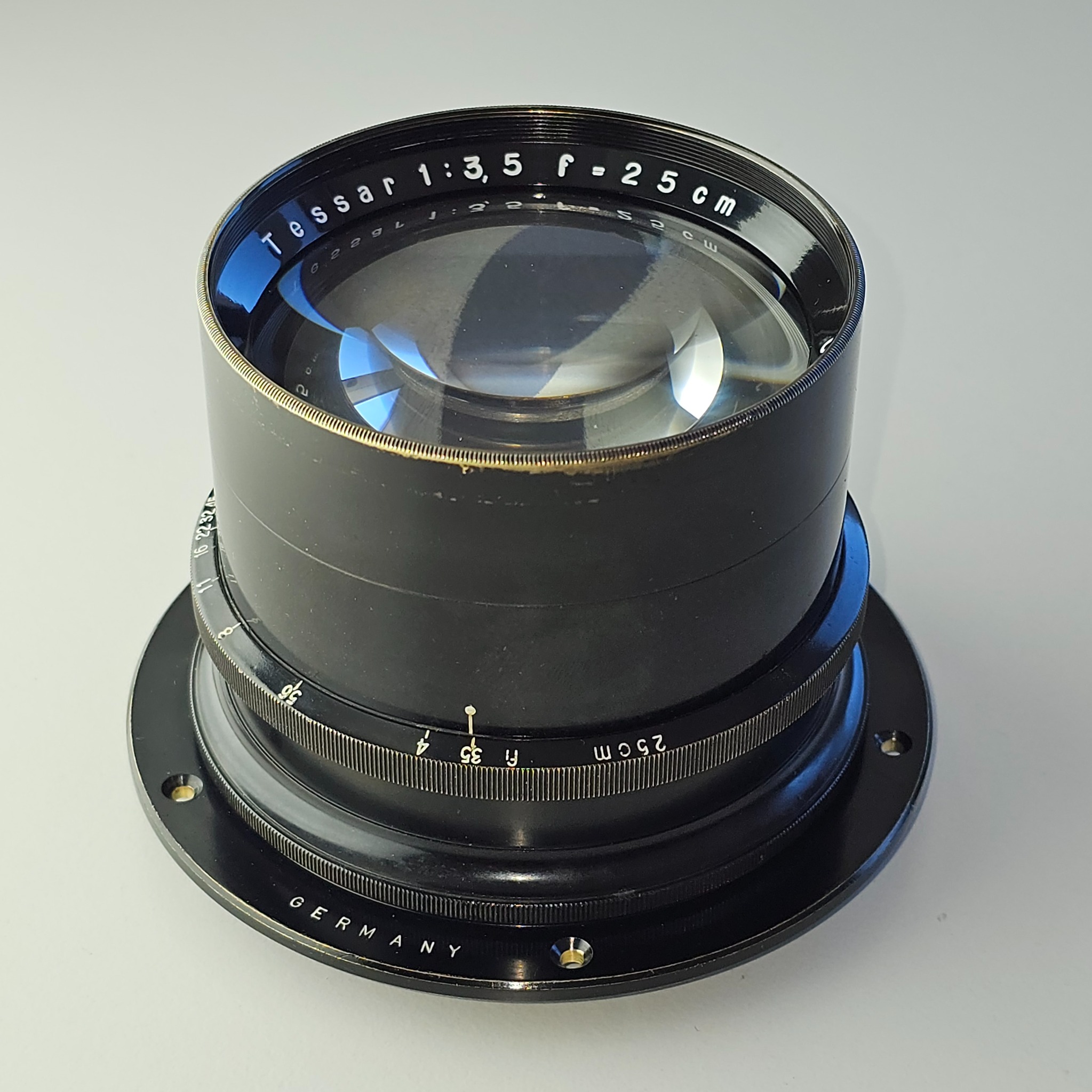
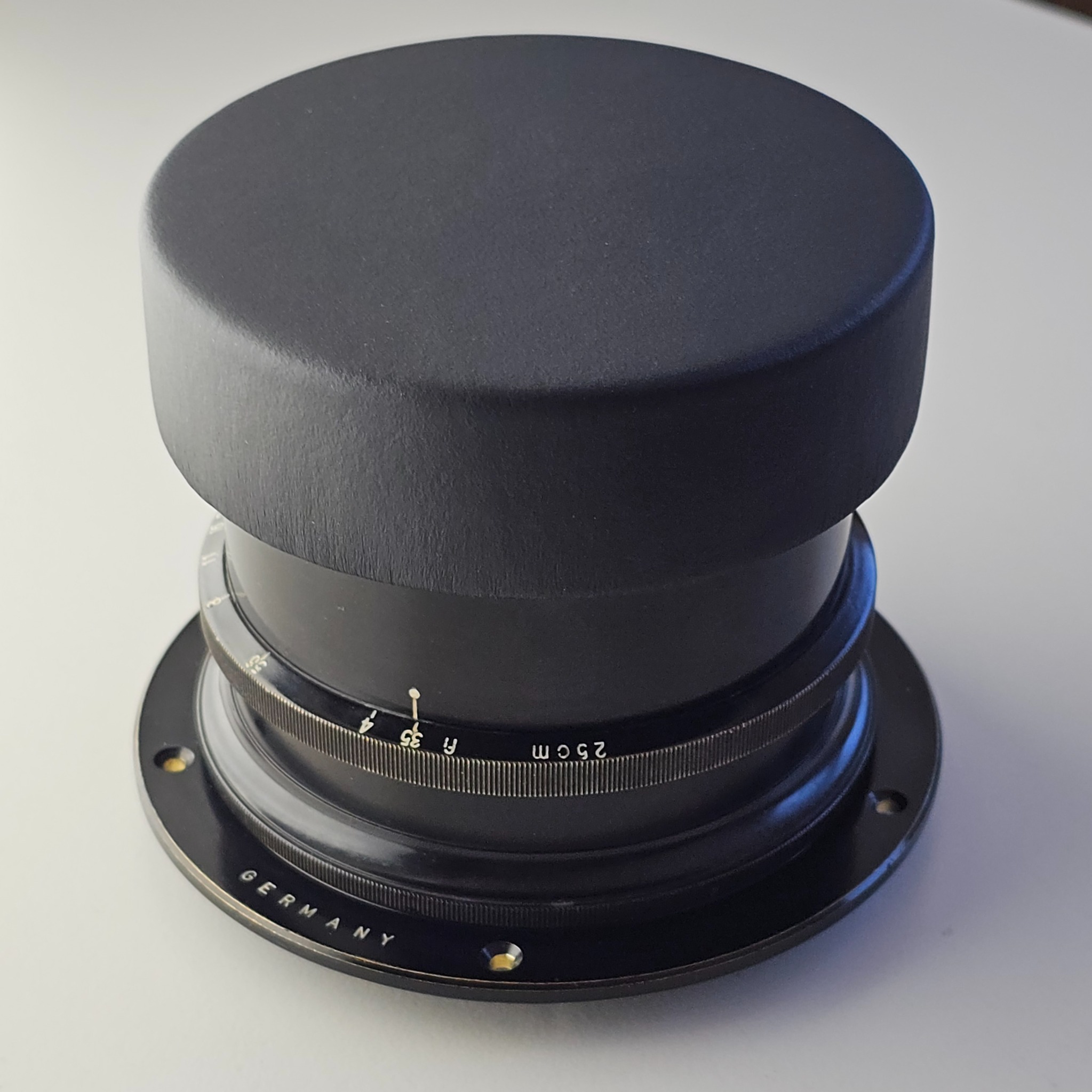
A week ago, a Carl Zeiss Jena Tessar 25 cm f/3.5 came my way—at a pleasingly low price, considering its condition and the rarer, fast version. The glass is clear, and everything works flawlessly. A good reason to make it a suitable lens cap from genuine leather: my sixth this year.
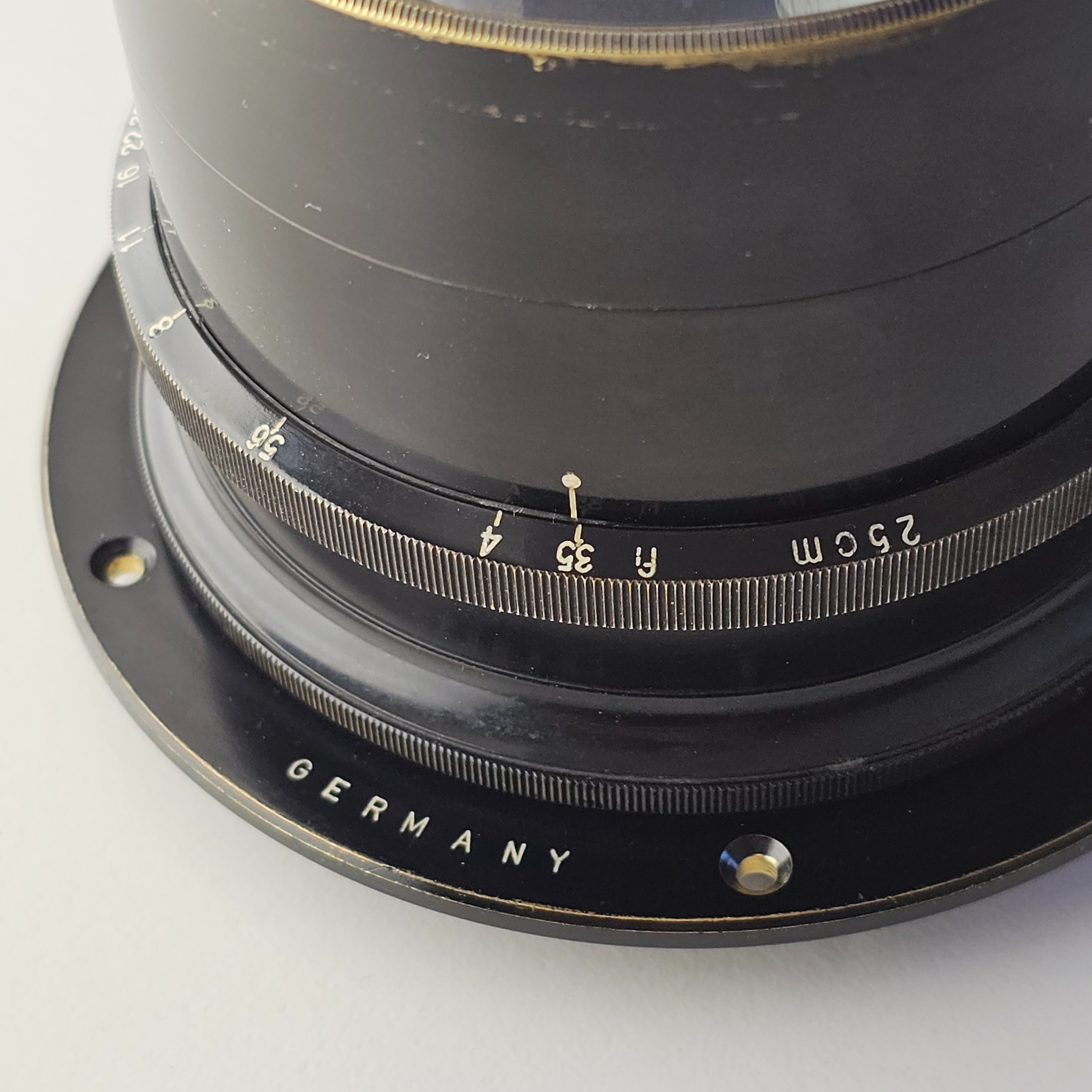
First, though, a little about the lens itself. The Tessar with serial number 870975 can be dated to approximately 1928, making it almost a hundred years old. One distinctive detail is the word “GERMANY” on its original flange. I had not previously encountered a marking in this position on a German lens from this period.
My first thought was that it might have been intended for export. The English indication of origin supports that idea; for example, “GERMANY” could have been sufficient as an origin marking when importing it into the United States, even without the words “Made in”. Perhaps this Tessar was once sold to America and eventually returned to Germany. An interesting thought, although the marking alone cannot establish that journey.
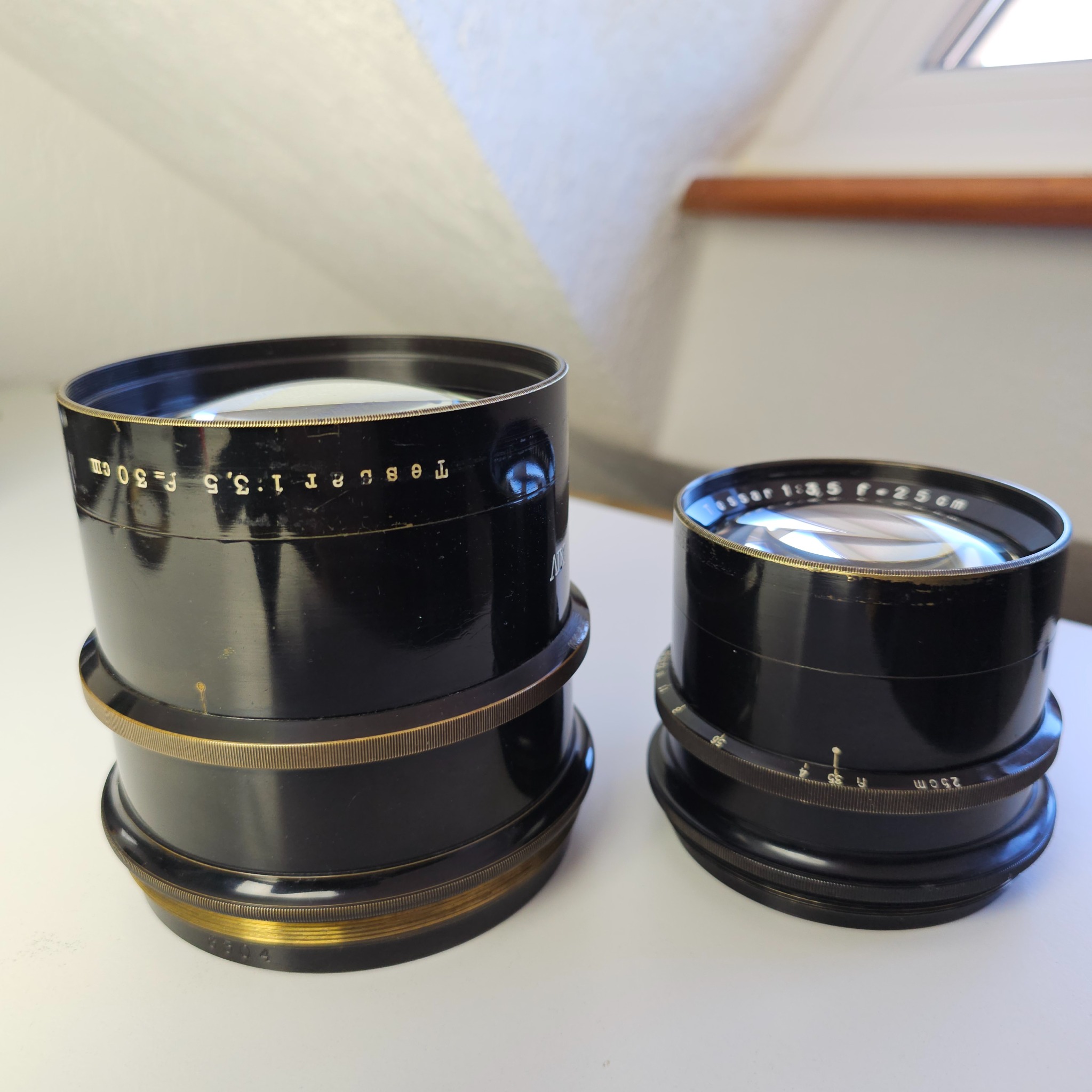
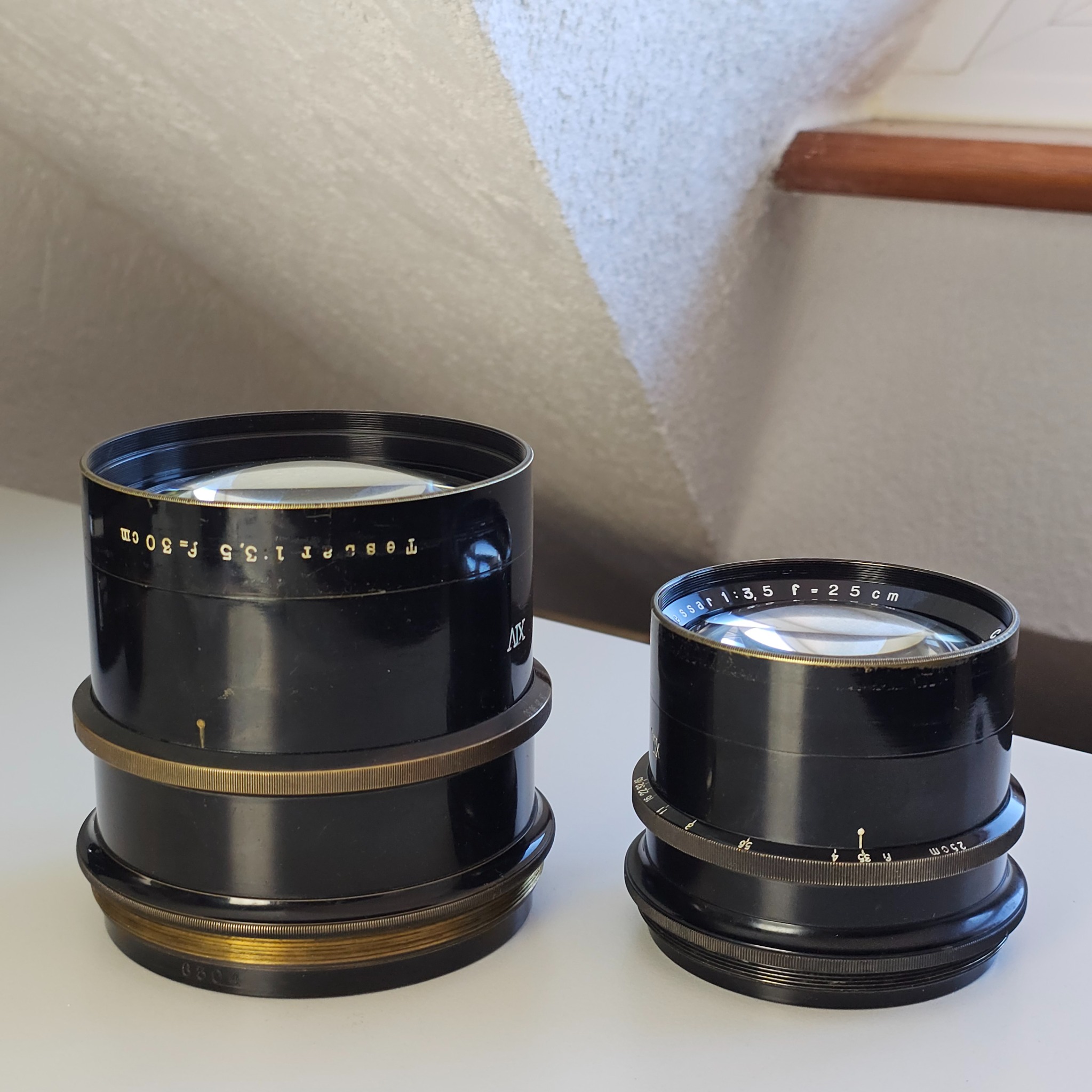
In the comparison photograph, the 25 cm lens stands on the right beside its older brother, the Tessar 30 cm f/3.5 with serial number 276304. That one dates to around 1914/15. Both versions are rarely encountered today; in my experience so far, the 30 cm version is even rarer.
For its size, the smaller Tessar is surprisingly heavy. Without its flange, it weighs 1,425 grams, with a barrel length of 8.2 cm and a diameter of 8.4 cm measured at the front. The 30 cm lens weighs 2,170 grams, is 11.5 cm long and has a front diameter of 10.6 cm.
Out of curiosity, I calculated how much weight each lens packs into the same amount of space. To do this, I treated their barrels as simple cylinders. From the length and diameter, the 25 cm lens has an external volume of approximately 454 cm³, while the 30 cm lens is around 1,015 cm³. To compare the differently sized lenses, I converted their weights to an equivalent volume of 100 cm³: the 25 cm lens contains about 314 grams in that space, and the 30 cm lens about 214 grams.
For the same amount of space, then, the 25 cm lens carries approximately 100 grams more. Those additional 100 grams are just under half of the larger Tessar’s 214 grams—about 47 percent, to be precise. This means that although the 25 cm lens is lighter overall, it packs considerably more weight into its external dimensions. Of course, this is not a measurement of the actual material density, but it describes well how compact and heavy it feels in the hand.
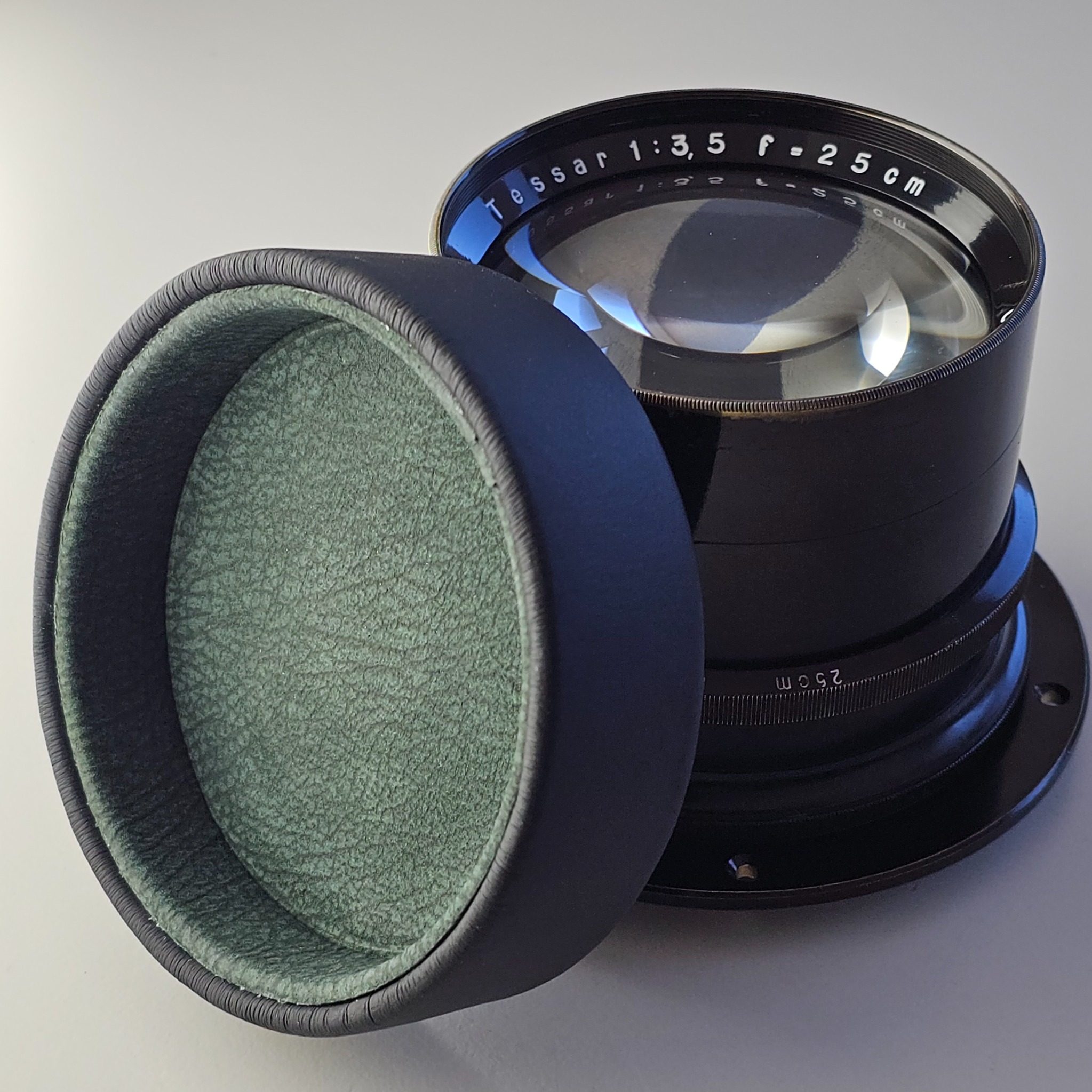
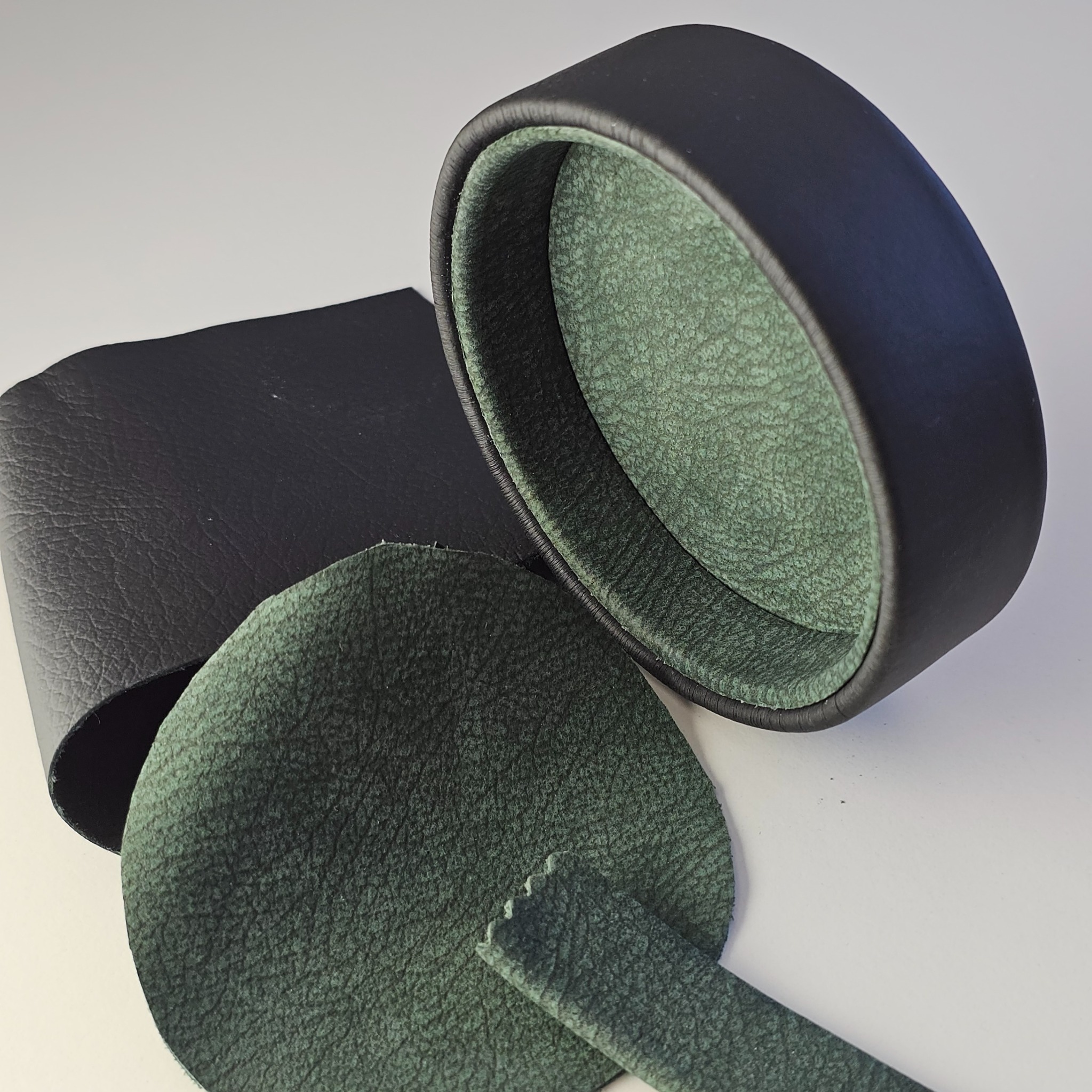
For the new cap, I used leather offcuts from furniture manufacturing this time. The outside is covered in black cowhide. It is relatively thin, but somewhat harder to work with than very thin bookbinding leather. For the lining, I chose a green suede with a pleasantly velvety surface. I also like the combination of black and this muted green.
Because I keep using different leather offcuts and am not a professional myself, each cap becomes a small craft challenge. Getting the fit right is especially important, and this needs to be considered from the moment the cardboard body is built.
To do this, I first wrap several cardboard strips in layers around the lens barrel. In this case, there were three layers with a total thickness of 4.2 mm. Together, they form a temporary spacer ring. Over this, I shape and glue the actual cardboard ring that will later carry the leather covering. The spacer layers are not glued in place and are removed once the cap blank is finished. This leaves enough room between barrel and cap for the leather folded inward or for the lining, as well as a little clearance for putting the cap on and taking it off.
The thickness of this spacer ring depends on the material on the inside of the cap’s rim. Suede or cotton velvet can take up more space than a thin self-adhesive velour film. That is why I have to adjust this allowance for each cap. Even a small difference in material thickness can determine whether the finished cap slides smoothly or fits too tightly.
In the end, it should fit securely and form a light-tight seal, yet come off easily and without a jerk. For my photographs with long exposure times, the cap also acts as a shutter. If I have to pull hard on it, I may unintentionally shift the camera or the lens standard and disturb the focus I have already set.