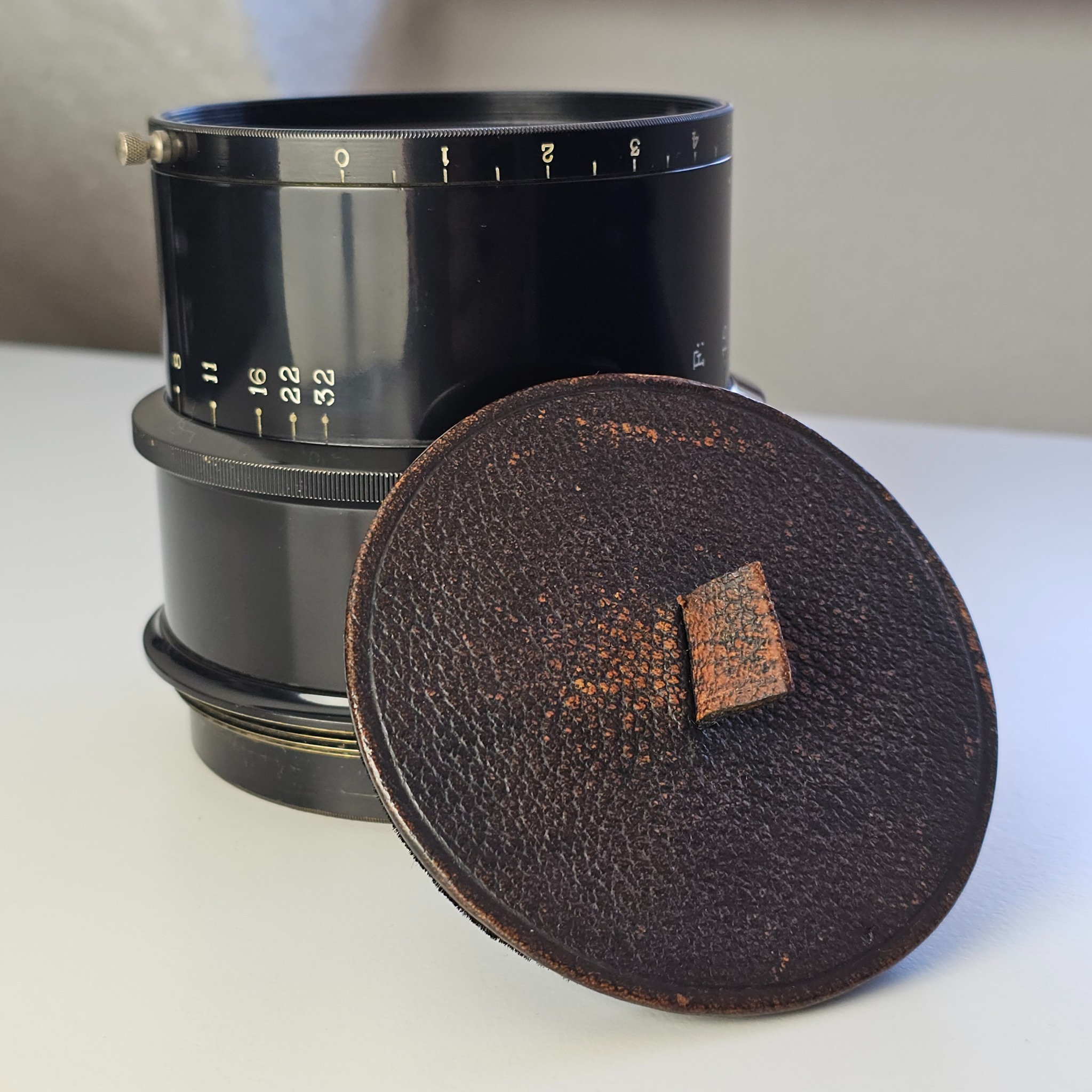
A Voigtländer Universal-Heliar from 1931
At the beginning of September, I travelled to Schweinfurt to collect an old studio camera and lens. My main interest was this enormous Voigtländer Universal-Heliar 4.5/36 cm. I had to take the accompanying Stella studio camera because the seller would not sell the lens separately.
For the camera and lens together, I paid only about half of what many dealers ask for a comparable lens alone. A purchase like this always involves a risk, however. Only after a thorough examination do you know whether you have really found a bargain or brought home a costly surprise. In this case, some work was necessary, but the purchase nevertheless proved to be a bargain.
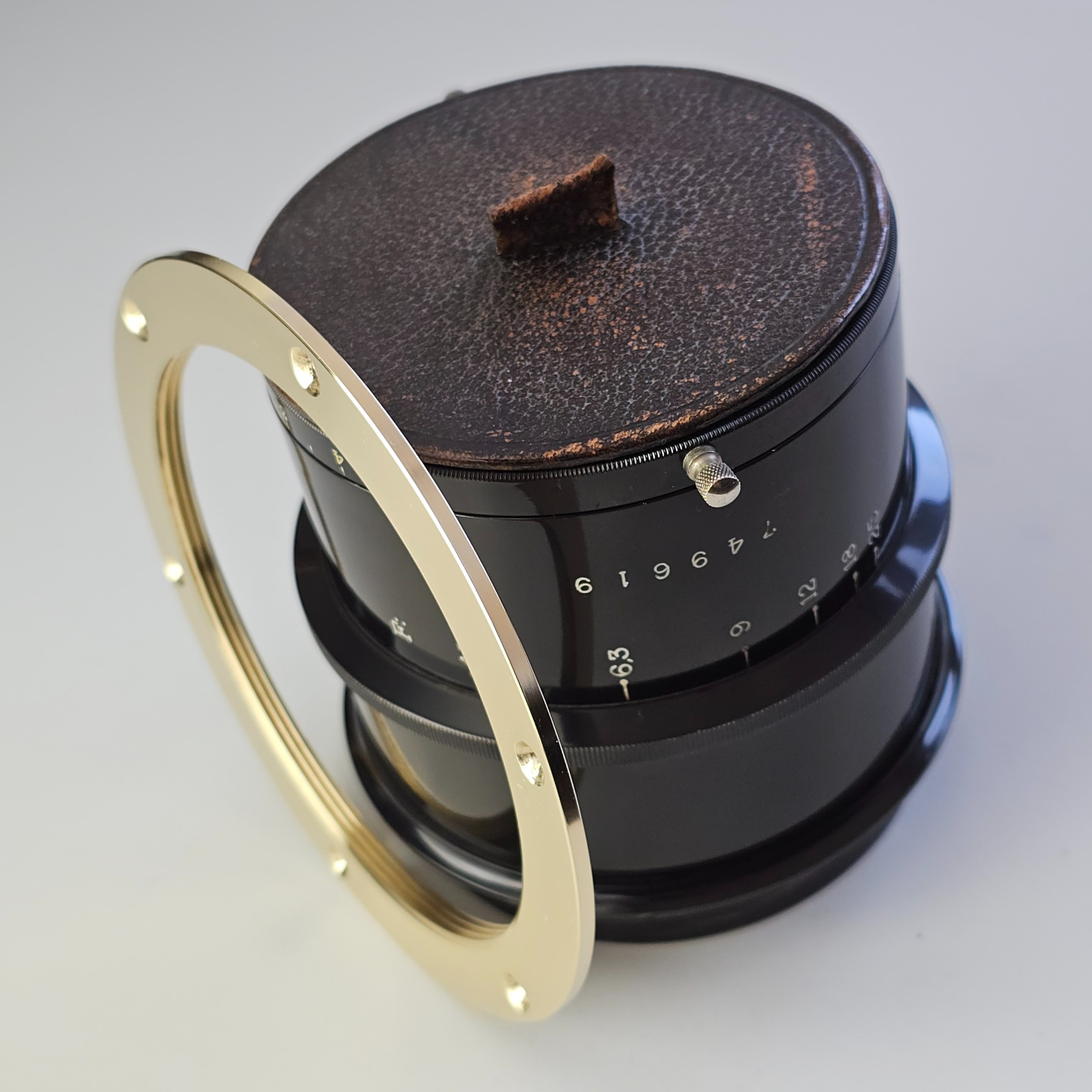
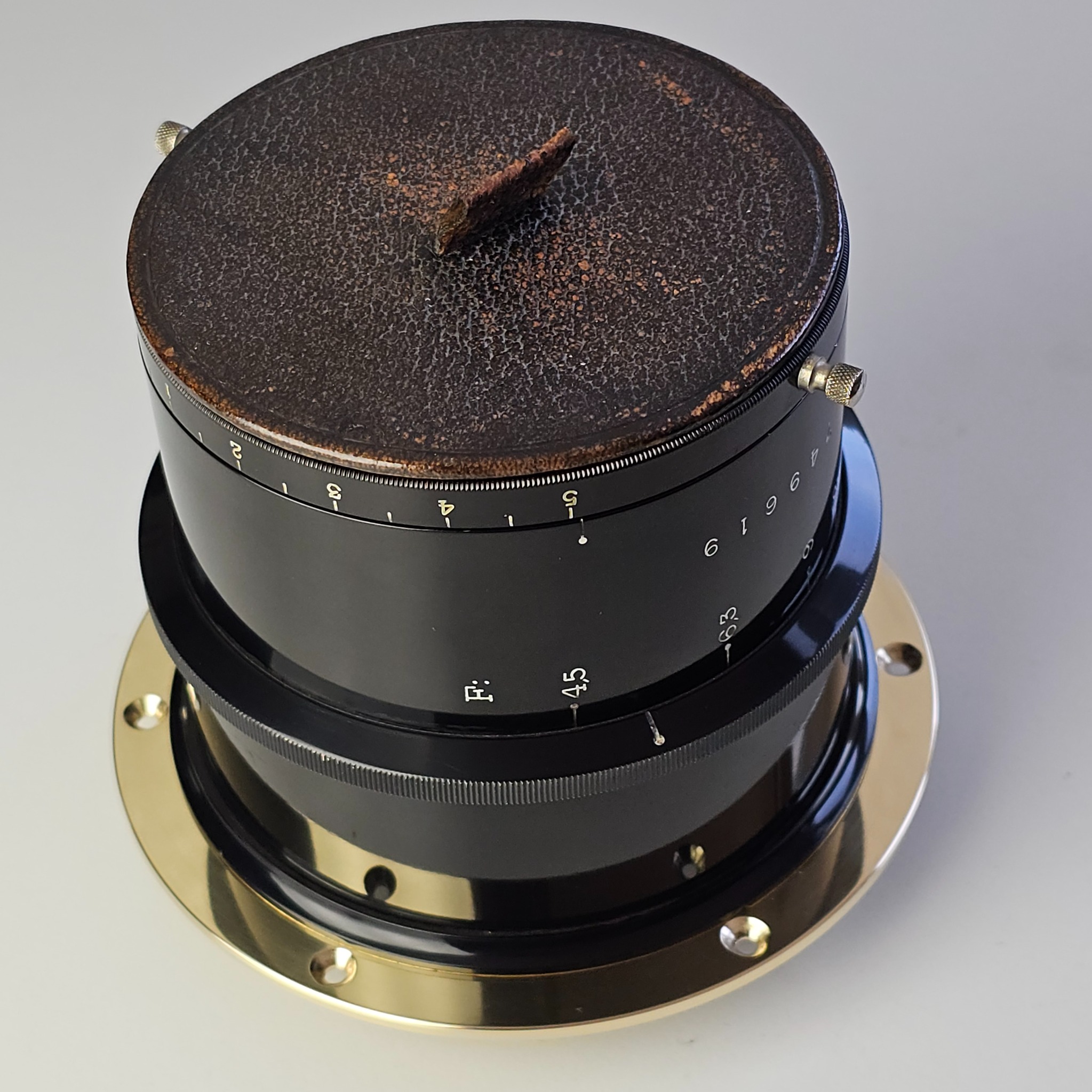
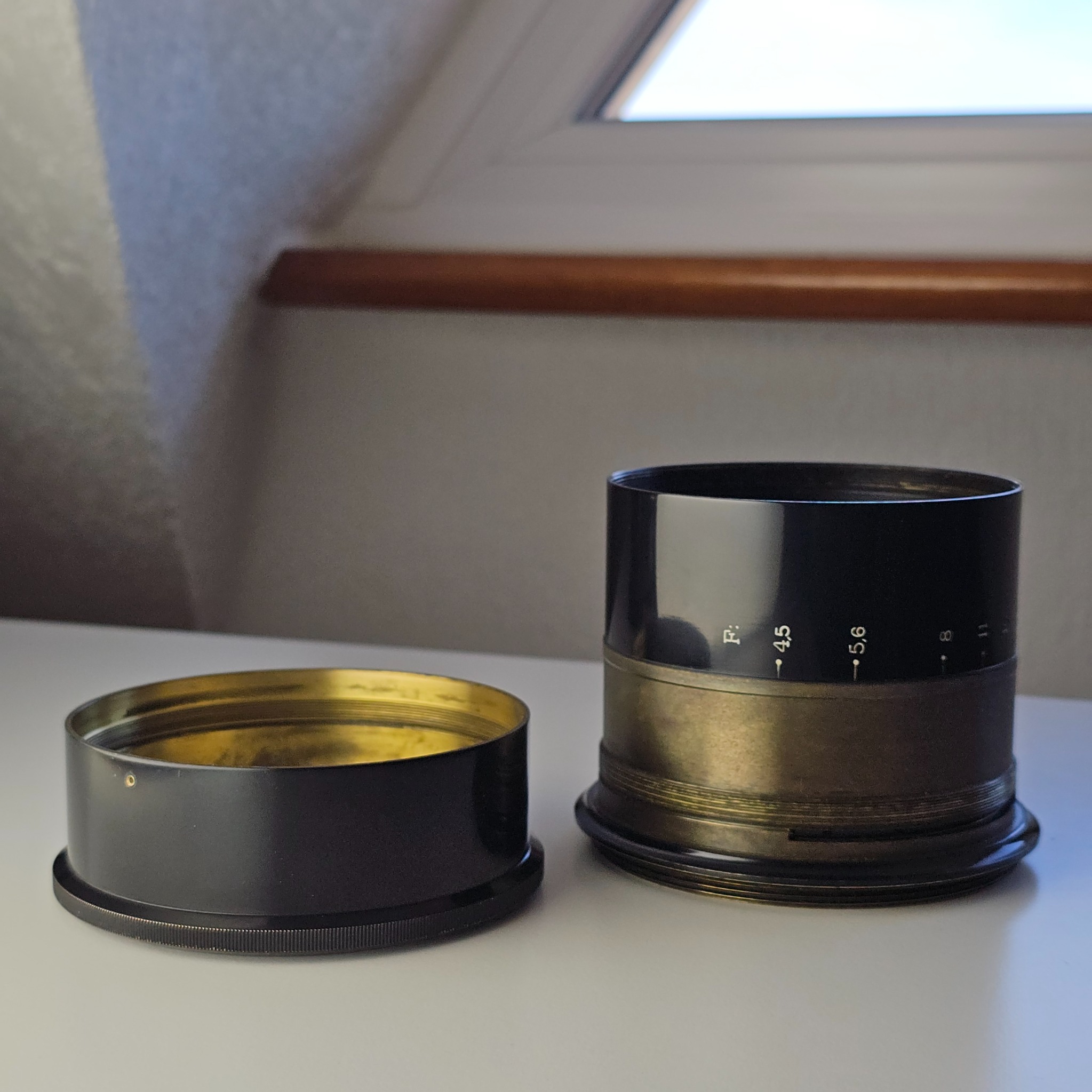
The Universal-Heliar bears the serial number 749619 and, according to Hartmut Thiele’s Fabrikationsbuch Photooptik – Voigtländer, was manufactured in 1931. It is clearly the uncoated pre-war version. It can also be recognised by its knurled, cylindrical, nickel-plated control knobs. The post-war versions, by contrast, have smooth, chrome-plated knobs with a small spherical end.
I was particularly pleased that the original lens cap had also survived and was still in good condition. Making a replacement for such a distinctive, precisely fitting cap would certainly not have been easy.
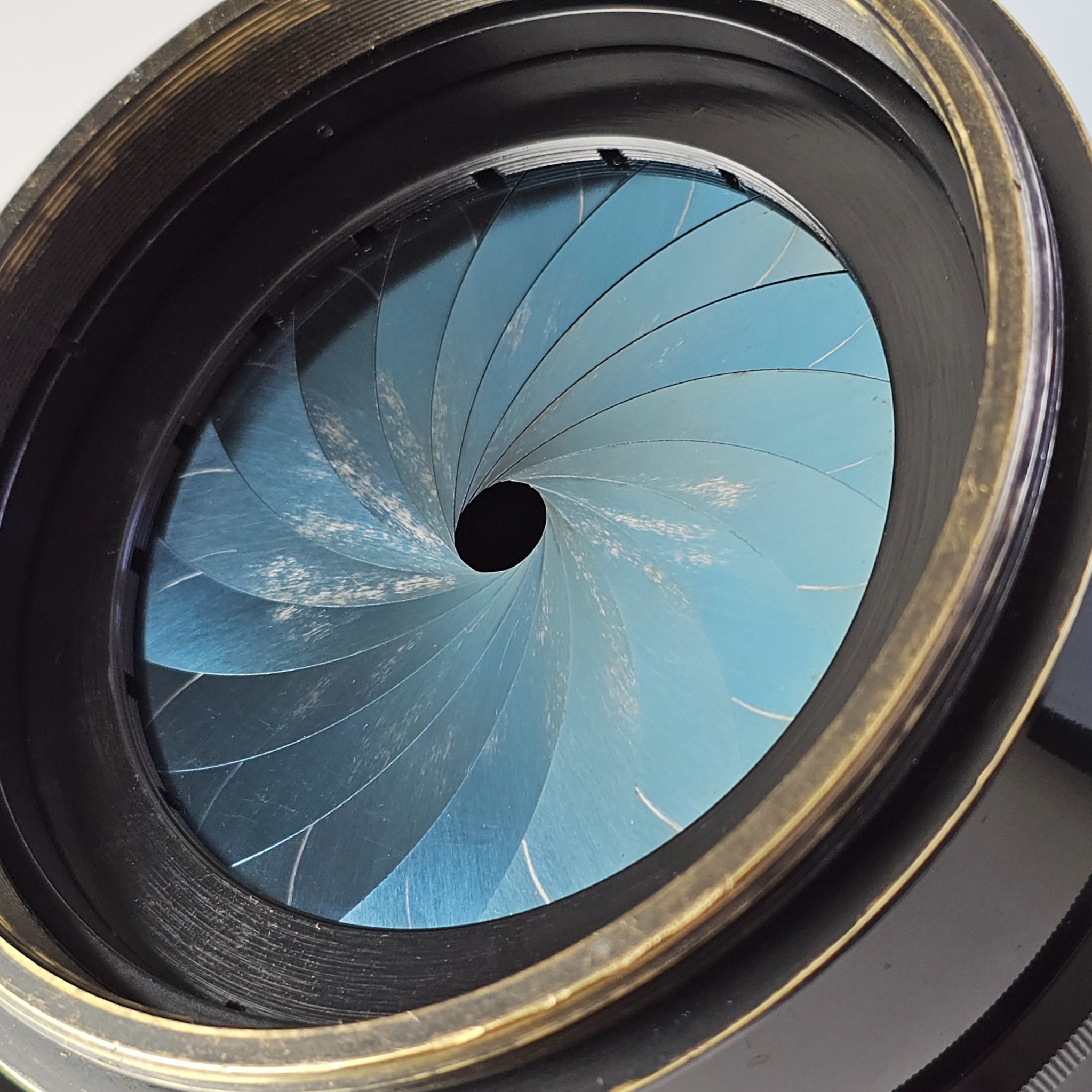
The biggest problem was the completely oil-covered aperture blades. Apparently, the decades-old grease in the soft-focus mechanism had released its base oil. Over time, this had migrated as far as the aperture and coated all the blades.
Taking apart a Universal-Heliar is somewhat more complicated than dismantling a Tessar. However, if you proceed slowly, examine each step carefully and document it, the construction is quite understandable.
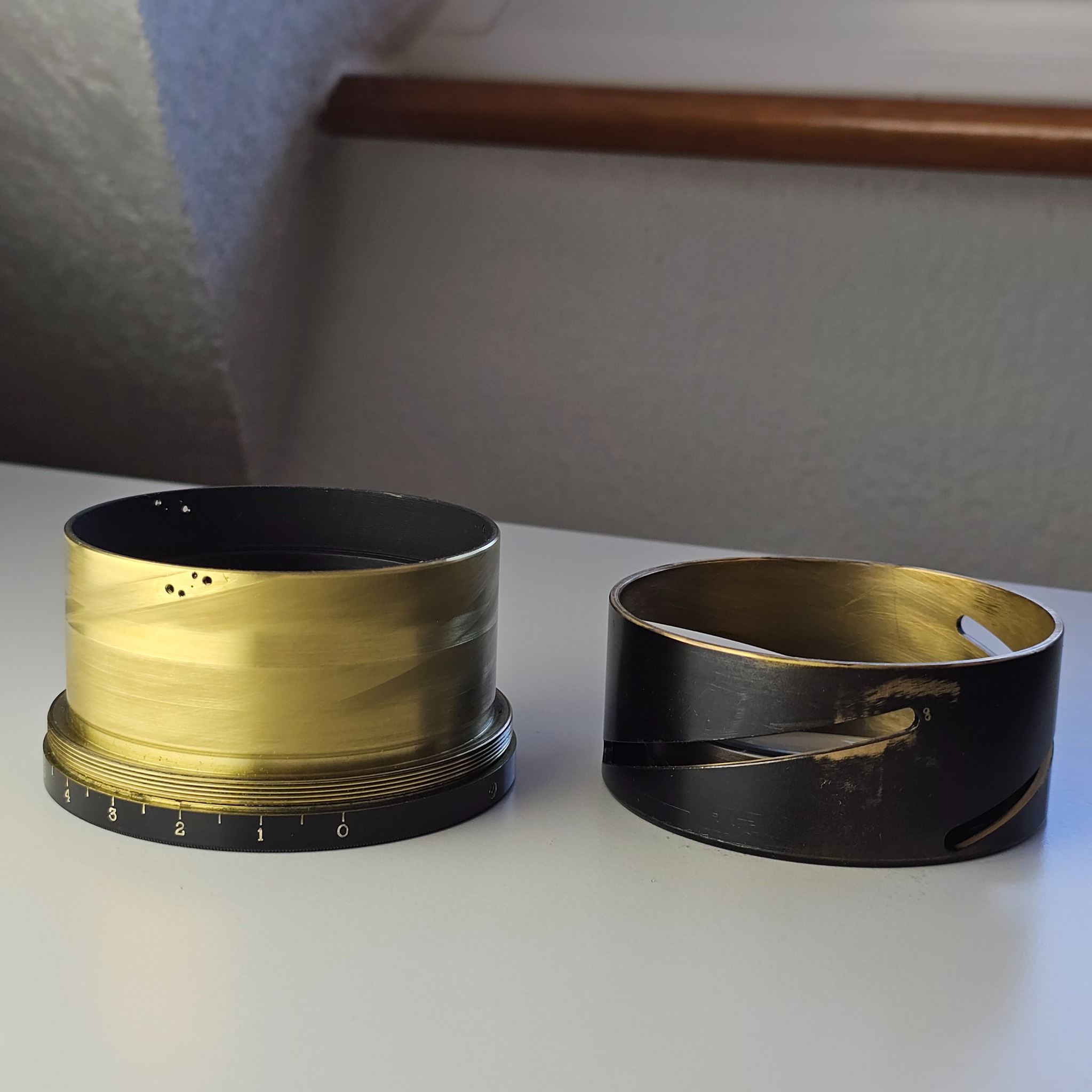
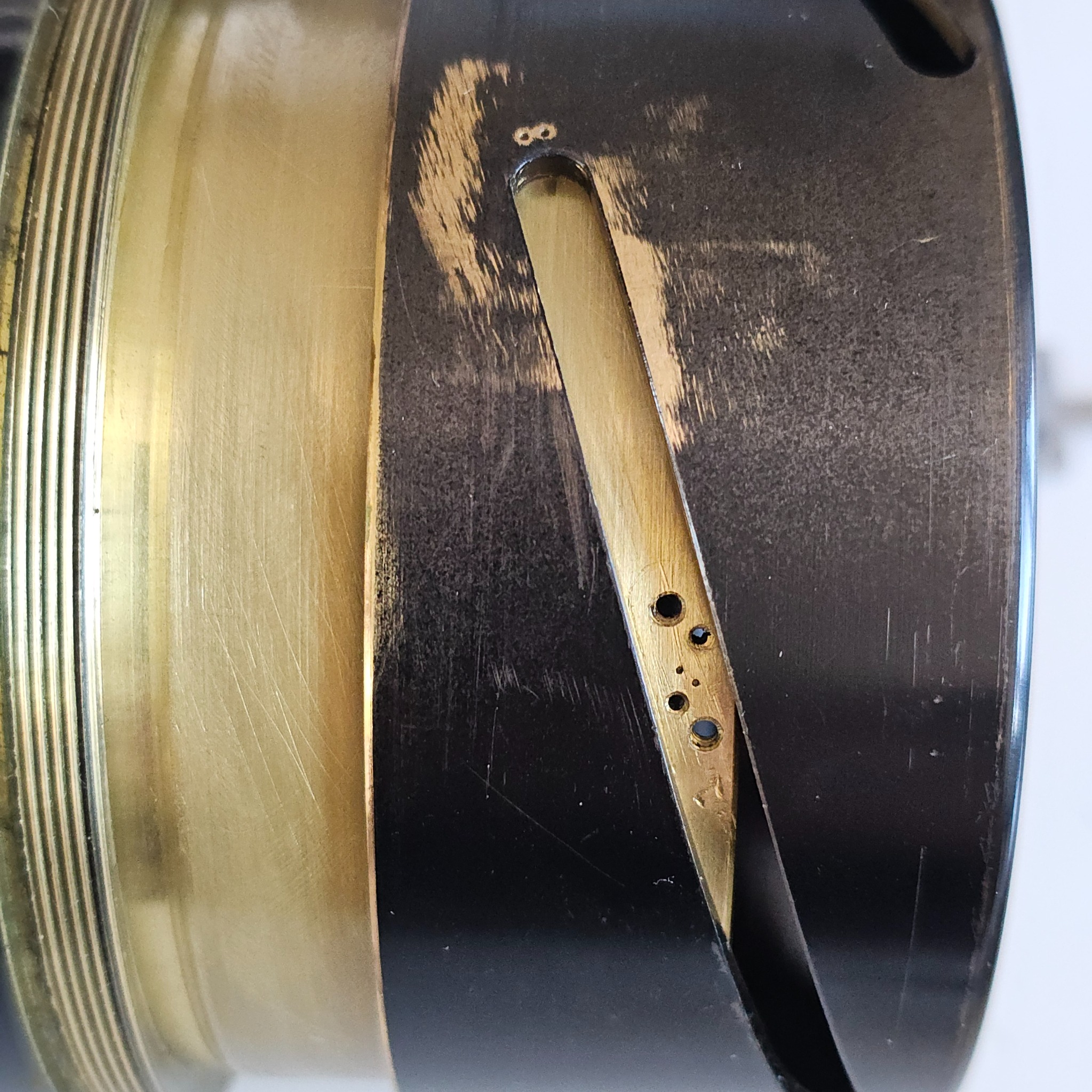
In the Universal-Heliar, soft focus is adjusted by moving the central biconcave lens along the optical axis. The rotation of the adjustment ring is converted into this longitudinal movement by three angled guide slots and their corresponding brass guide tabs. At setting 0, the lens is largely corrected; as the number increases, so does the soft-focus effect. I was also able to remove and clean this movable lens element. There was a slight haze on its surface, probably a deposit from volatile components of the old lubricant. Fortunately, it could be removed completely. There was no evidence of fungus, glass corrosion or etching.
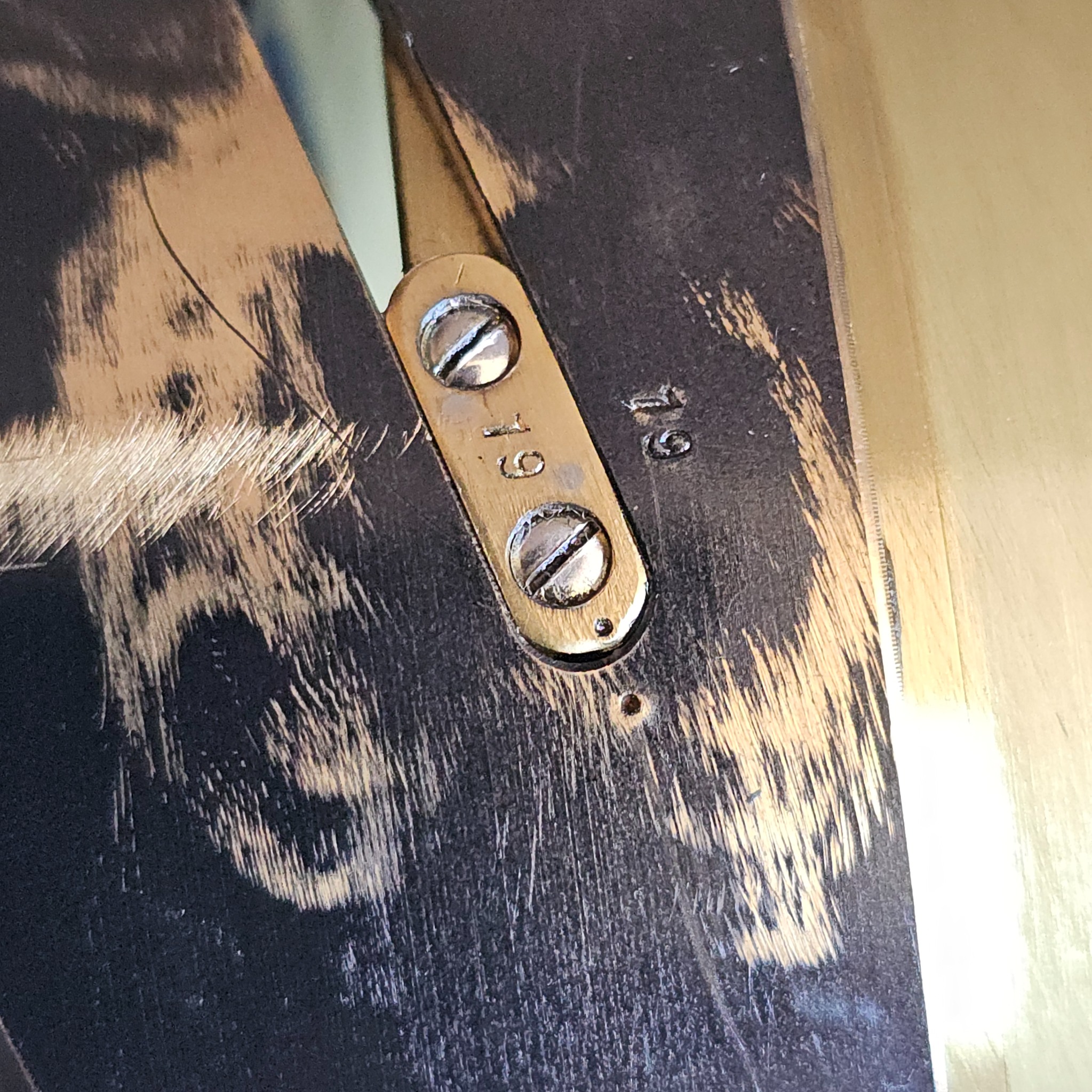
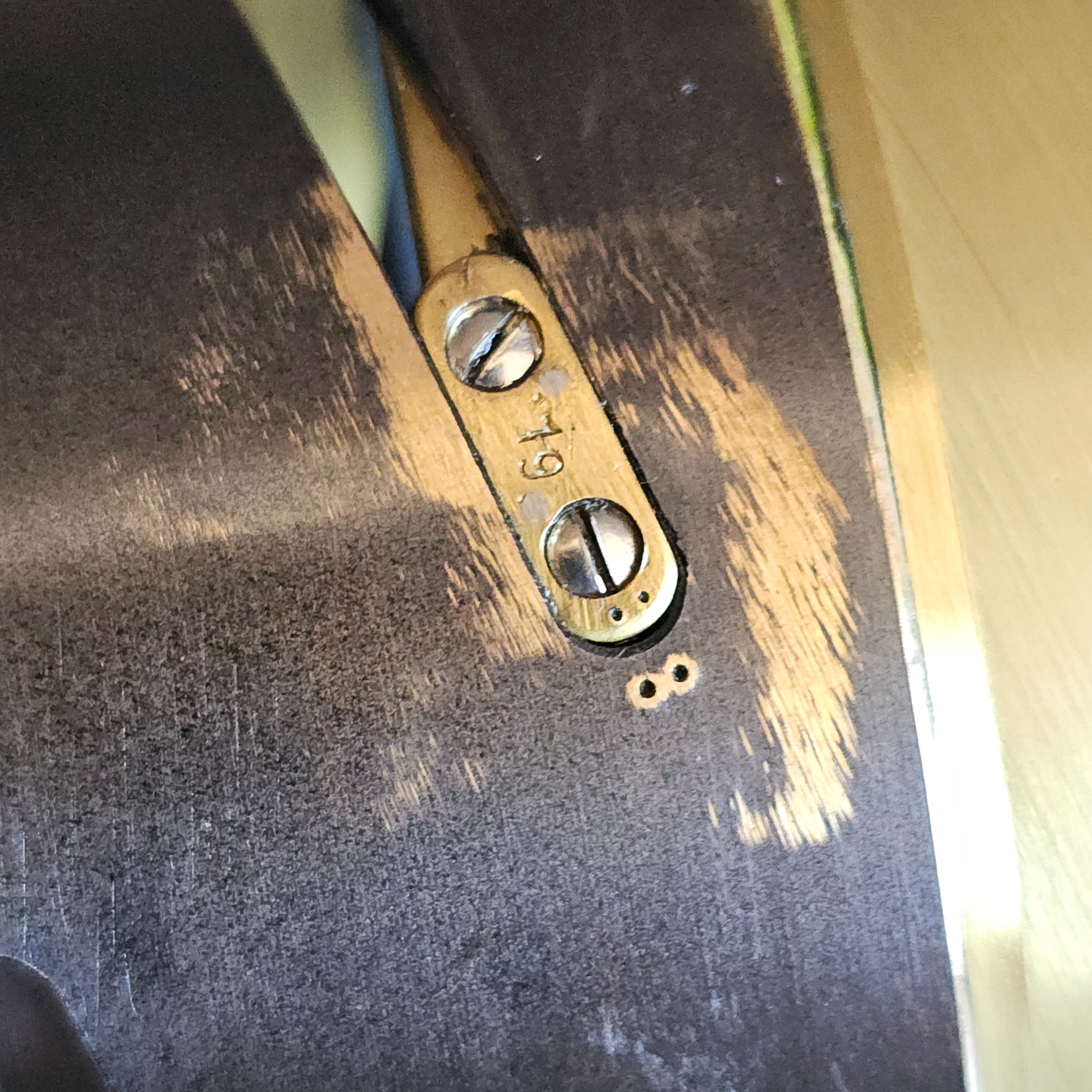
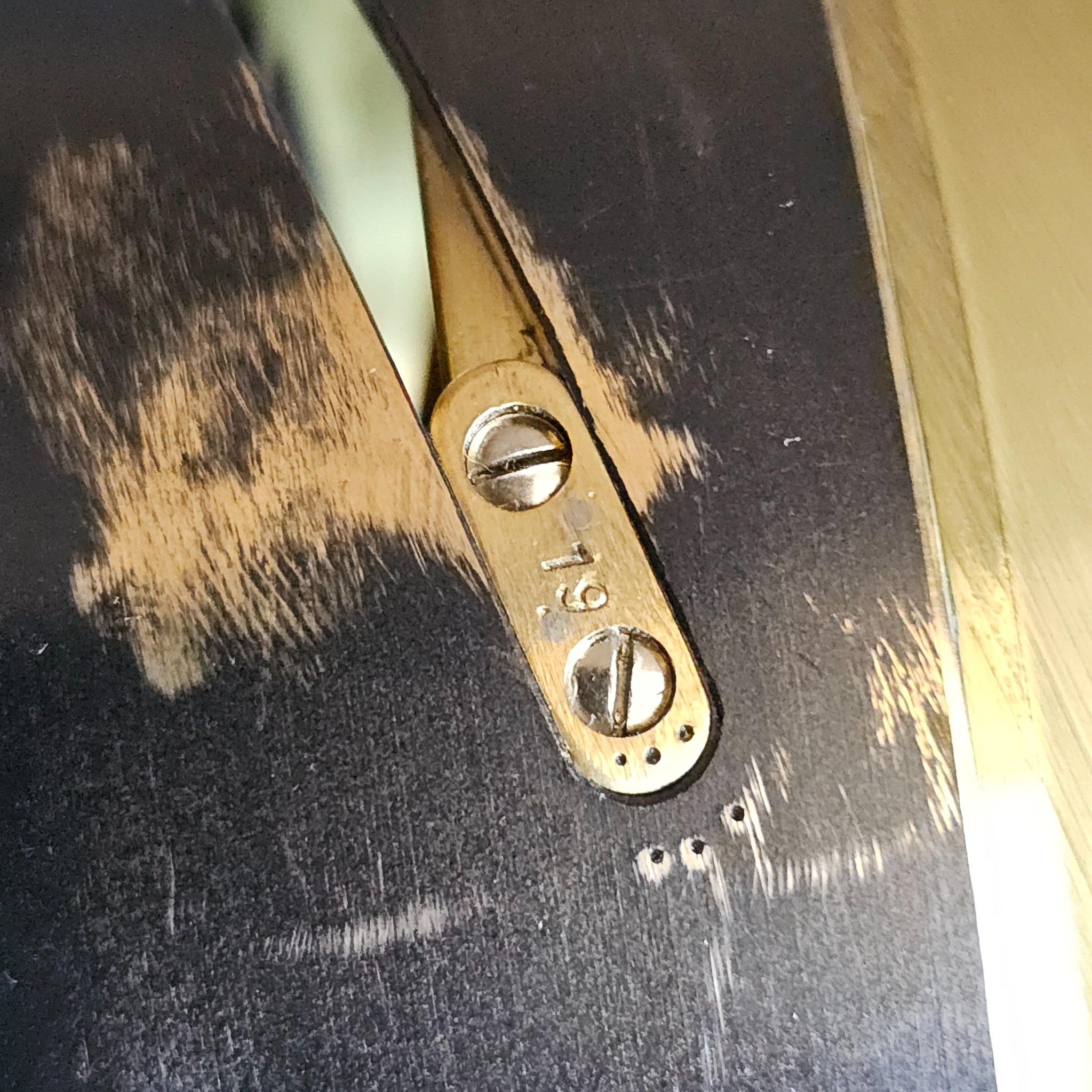
The factory markings on the inner barrel of the soft-focus adjustment were particularly interesting. The brass guide tabs attached there bear the number 19, stamped with number punches, corresponding to the last two digits of the lens serial number. In addition, the tabs and their respective positions on the barrel were marked with matching centre-punch dots: one, two or three dots each. This made it possible to return every tab unambiguously to its original position during reassembly.
The old screws presented another challenge. Their slots are so narrow that ordinary screwdrivers did not fit properly. I therefore ground some bits even flatter and thinner specifically for this lens. This was the only way to loosen the screws without damaging the narrow slots.
Thoroughly removing the old grease and oil alone took well over an hour. I first cleaned the removed aperture blades with high-quality lighter fluid and then with 99.9-percent ethanol. Afterwards, they were clean, dry and moved freely again.
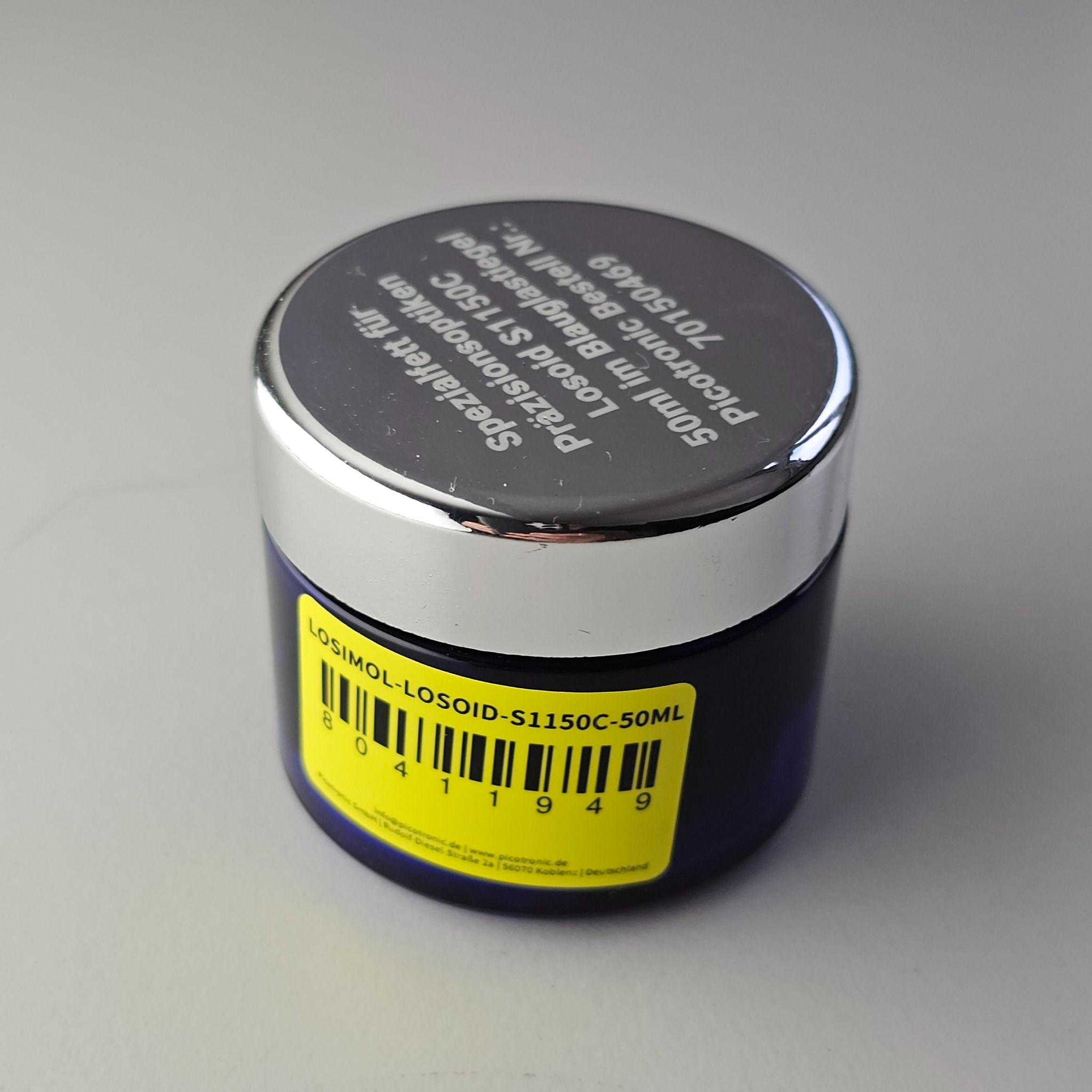
After cleaning, reassembly began. The actual sliding surfaces of the inner barrel and the soft-focus adjustment then received only an extremely thin film of LOSIMOL LOSOID S1150C. This is a high-viscosity specialist grease for the drive mechanisms of optical and precision mechanical instruments. What mattered to me was applying it extremely sparingly, and only to the surfaces that rub against one another, so that no excess grease could migrate towards the aperture blades again.
Happily, all the lens elements were in very good condition. After cleaning, they were clear and free of fungus. I could not find any significant scratches or cleaning marks either.
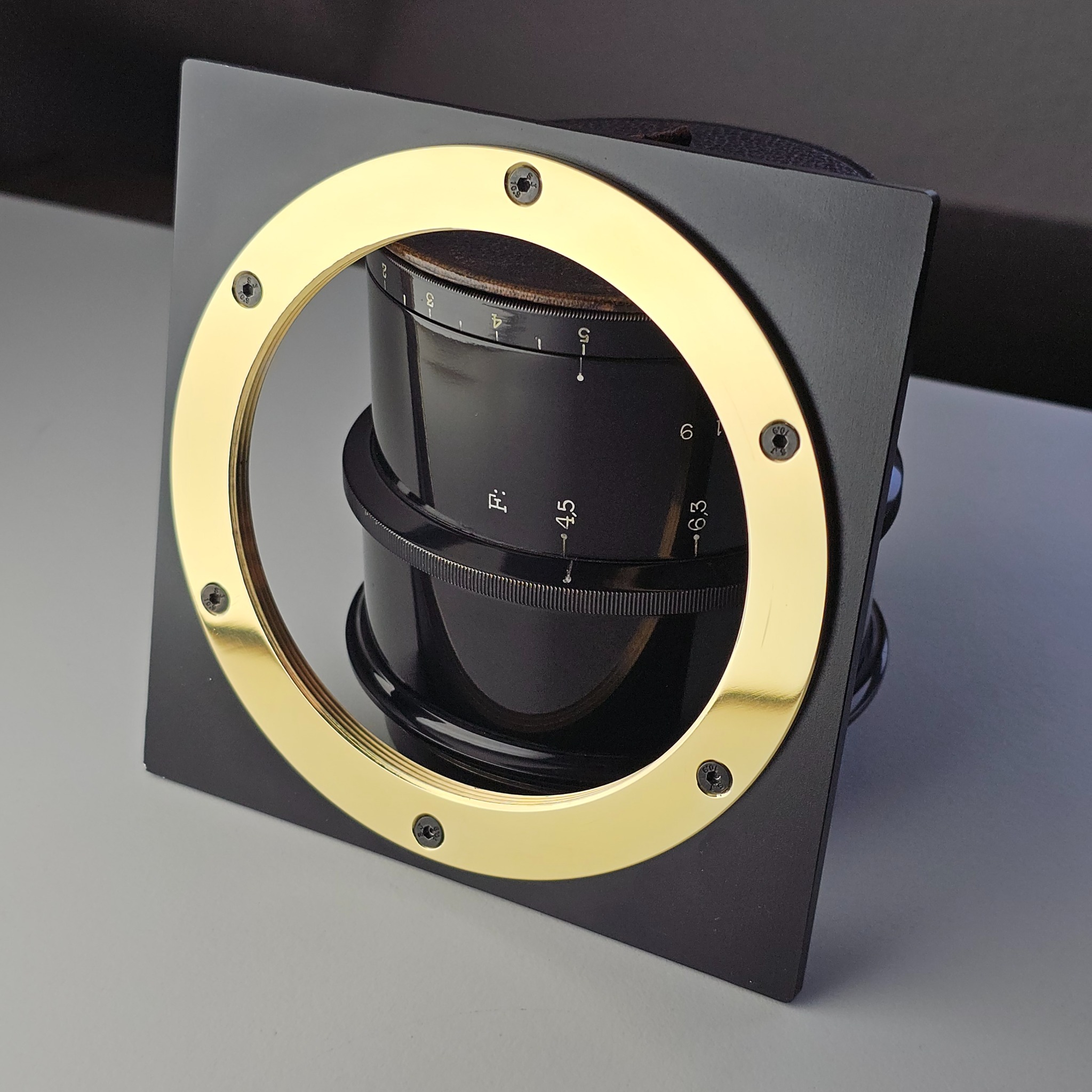
Another shortcoming was the old aluminium mounting flange. It was narrow, rather roughly made and not particularly appealing to me visually. I therefore had a new, much wider brass flange made. In my opinion, it not only suits this historical lens much better aesthetically, but is also sturdier and more practical.
I then mounted the new brass flange on a Sinar lens board myself. The finished assembly now tips the scales at an impressive 2.840 kilograms—certainly no lightweight, but an impressive piece of German optical and photographic history.